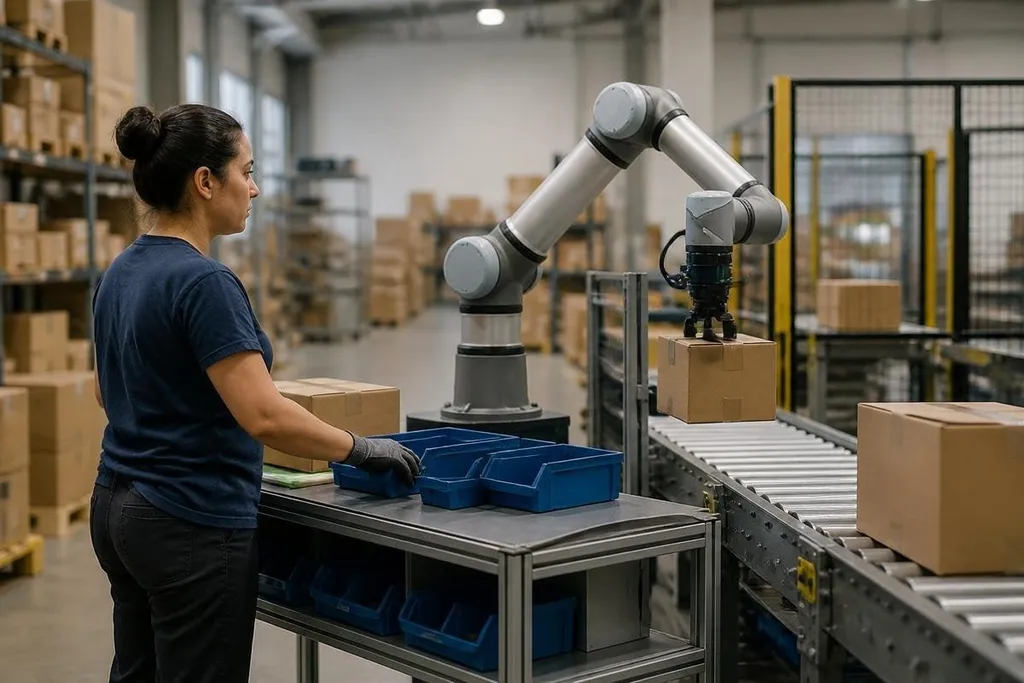
One system can take over one task while leaving the job title intact. That small change can still alter pay, training, safety, and who gets a say at work. For managers, the social question starts before installation: which tasks will change, and who carries the cost?
Quick read
- Task changes often arrive before job cuts, so staff need notice and training early.
- Faster output can raise pressure if managers measure people by robot speed.
- The people affected should help set safety rules and review new work plans.
The first change is usually inside the job
Robot adoption rarely begins with a whole job disappearing. A system may move boxes, inspect parts, clean floors, or sort parcels while a person still handles exceptions and checks results. That split changes the work around the robot.
Some workers may spend less time on lifting or repeated motion. They may spend more time watching alerts, fixing jams, checking sensor readings, or guiding the system when an object falls outside its training data. Those tasks need different skills, and they can bring more stress when the robot sets the pace.
A manager should map the task before buying the machine. Write down who does it now, how long it takes, where injuries or errors happen, and what the person will do after the robot takes one part.
A plan that covers only the machine leaves the human work undefined.
Pay and power can shift together
Output can rise without higher wages. The result depends on the company’s pay rules, the local labor market, and whether workers can take part in the decision. Two sites using the same robot can produce very different social results.
Workers may also lose control over their day. Software can assign tasks, record pauses, and flag slow movements. Those records might help fix a process, but they can also turn every delay into a personal score. A sensor cannot tell the difference between a worker taking a safe pause and a worker avoiding work.
Workers who run the task should help shape its design. They can spot blocked exits, awkward reach zones, weak alarm sounds, and steps a sales demo leaves out. Workplace robot safety reports can tie those concerns to named machines and sites before the next section looks beyond the emergency stop.
Safety includes more than the emergency stop
Physical safety remains the first check. A robot arm needs a safe work zone, clear access to the emergency stop, and rules for maintenance. An autonomous mobile robot needs routes that account for people carrying loads, visitors, and blocked aisles.
Social safety matters too. Workers need to know what the robot records, who can see the data, and how a manager will use it. They need a way to report faults without being blamed for a system problem. If a robot causes repeated delays, the review should examine the process before judging the person beside it.
The strongest opposing view is that automation can remove dirty, tiring, and dangerous work. That benefit is real when people receive safer tasks, fair training, and a say in the change. It weakens when the company keeps the output target and passes the strain to the remaining staff.
Adoption can widen gaps
Large firms may have money for system checks, training, and new roles. A small workshop may buy one robot and ask existing staff to manage it without paid learning time. That difference can widen the gap between workers who gain technical skills and those whose tasks shrink.
The same issue appears outside the workplace. Delivery robots, service machines, and care systems can affect access, privacy, and public space. People with mobility needs may gain help from a robot in one setting and face new barriers in another if the system was built around a narrow user group.
I’d judge a robot project by who gains control and safety, not by the number of machines installed.
A practical decision guide
Before approving a robot project, check these points:
- Name the changed tasks: list the work removed, added, and left for people.
- Set training time: give staff paid time with the robot before performance targets change.
- Keep human review: let a person challenge a safety alert, work score, or automated decision.
- Limit worker data: collect only what the task needs, set access rules, and state when records are deleted.
- Measure the human result: check injuries, turnover, pay, workload, and complaints alongside output.
- Review after launch: meet with staff at a fixed date and change the plan when the evidence shows harm.
A robot project earns public support when the people near the machine can see the rules, question the results, and share in the gains. The next useful measure is not the robot count. It is whether the changed job is safer, fairly paid, and still worth doing.